Starting from what is (or was) there
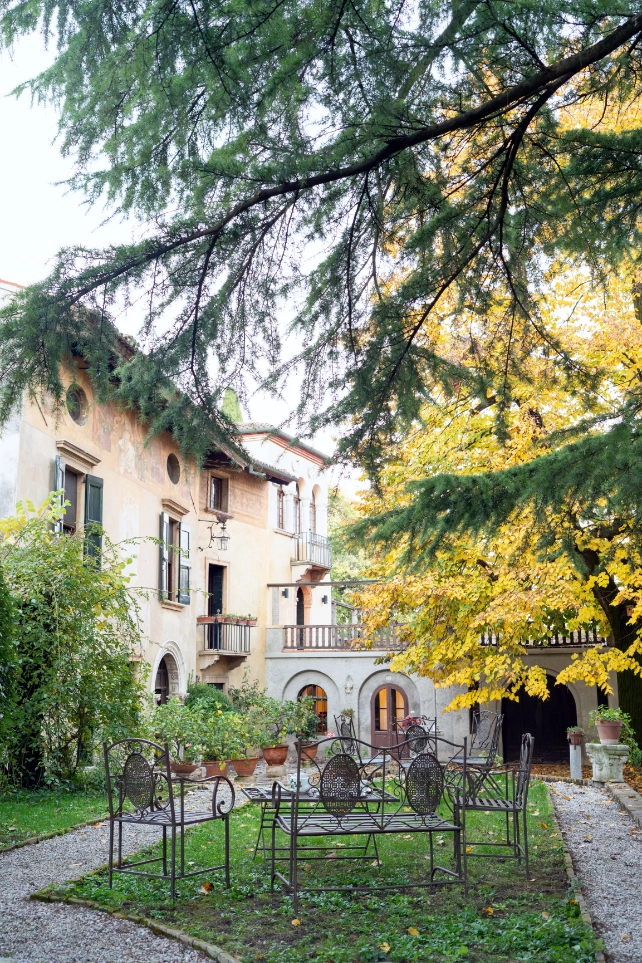
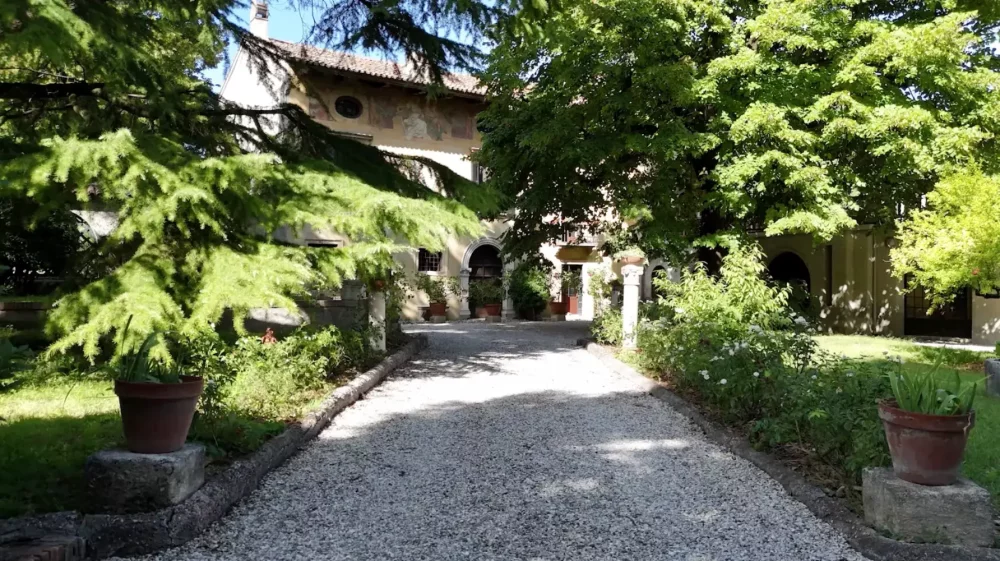
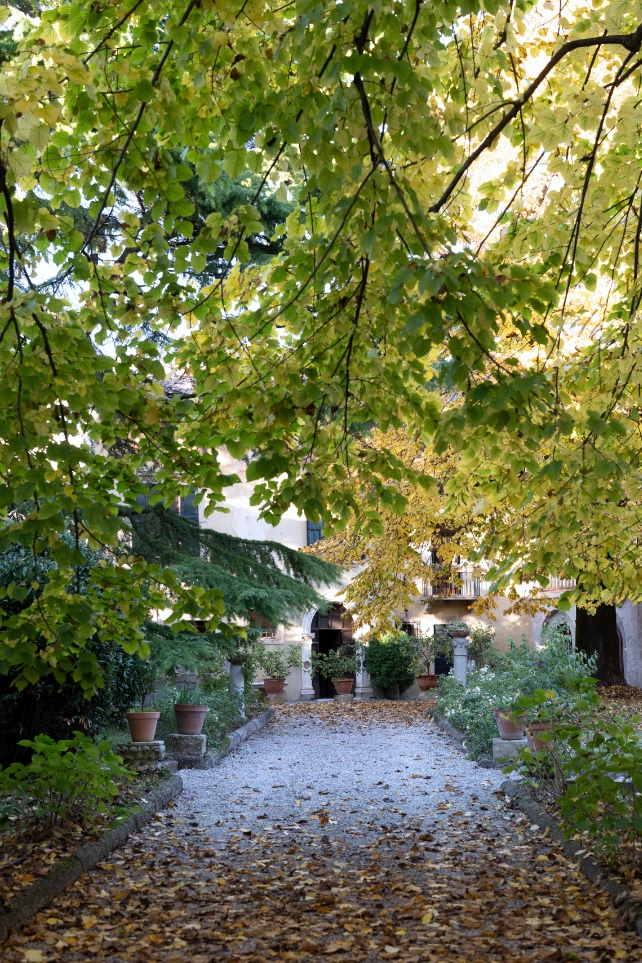
Today, the garden welcomes visitors with a dynamic dialogue between the original linear, rationalist design and the natural growth of plants that are over a hundred years old.
The Front Garden
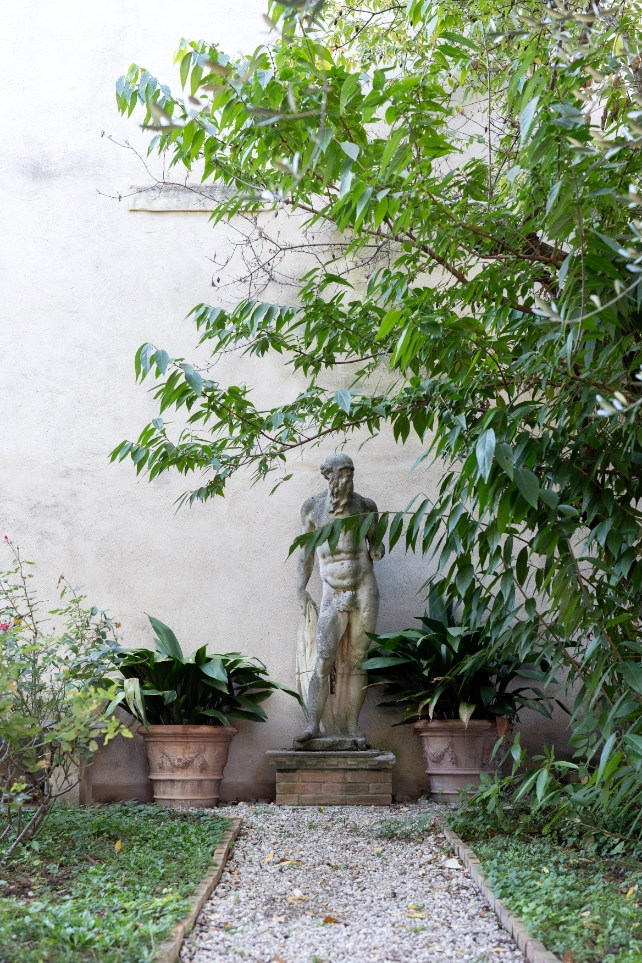
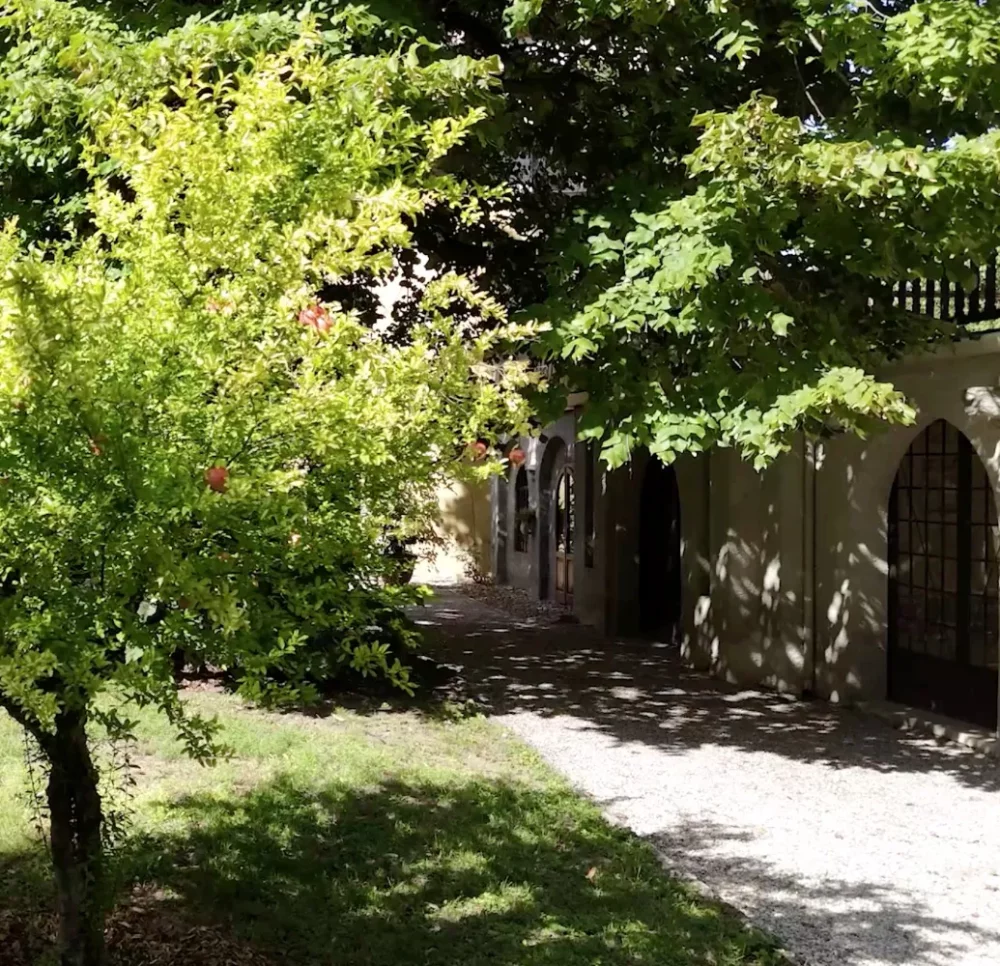
Isolated trees, English-style lawns bordered originally with pink-tinted concrete, gravel avenues, and axial perspectives are still recognisable today, though transformed. Centuries-old trees now occupy spaces that were once open. They lift the edges of flowerbeds with their roots, create shaded areas, and reach toward the villa with their branches. Wild plants have enriched the biodiversity of the lawns and beds, which have gradually moved away from the strict rules of the English-style lawn and yet remain enchanting.
The Cypress Alley
The Cypress Alley, with its eighty trees now standing just a few meters apart, stretches from the back of the villa toward the belvedere—now hidden by the branches of lower trees—passing through the vineyard.
Tradition
According to family tradition, the cypresses were planted in 1936 to celebrate the birth of Zeno, the first and only child of Bruna and Ferdinando. Now nearly ninety years old, the trees bear the marks of many challenges: from recent extreme weather events, which claimed three cypresses in a single storm, to the ongoing battle against Seiridium cardinale, the cypress canker—a fungus introduced from America that attacks the bark, killing branches first and eventually the entire tree.
Managing Cypress Canker
Managing cypress canker has been an important and instructive challenge for the new generation of the family. After various attempts and consultations, and following the removal of overhead spray irrigation that also wetted the cypresses, the focus shifted to improving soil vitality through mycorrhizal injections—microorganisms that help trees interact with the soil—and adopting a long-term approach to soil regeneration.
Our strategy
The strategy has been to accept that some trees may die while avoiding chemical treatments, instead investing in the long-term health of the trees rather than treating symptoms in the short term. The first treatment was applied to the entire avenue in 2020, and a second to half the avenue two years later. Expensive high-altitude treatments were abandoned in favour of patience and observation. Four trees were lost and replaced with clones resistant to Seridium, while the rest appear to be thriving.
The vineyard and the ‚Brolo‘
We believe that the vineyard was planted together with the cypress avenue or in the years shortly after. What is certain is that they frame the spaces behind the villa and create a transition between the formal front areas and the wilder ” section at the end of the property, called “the slope”.
The vines
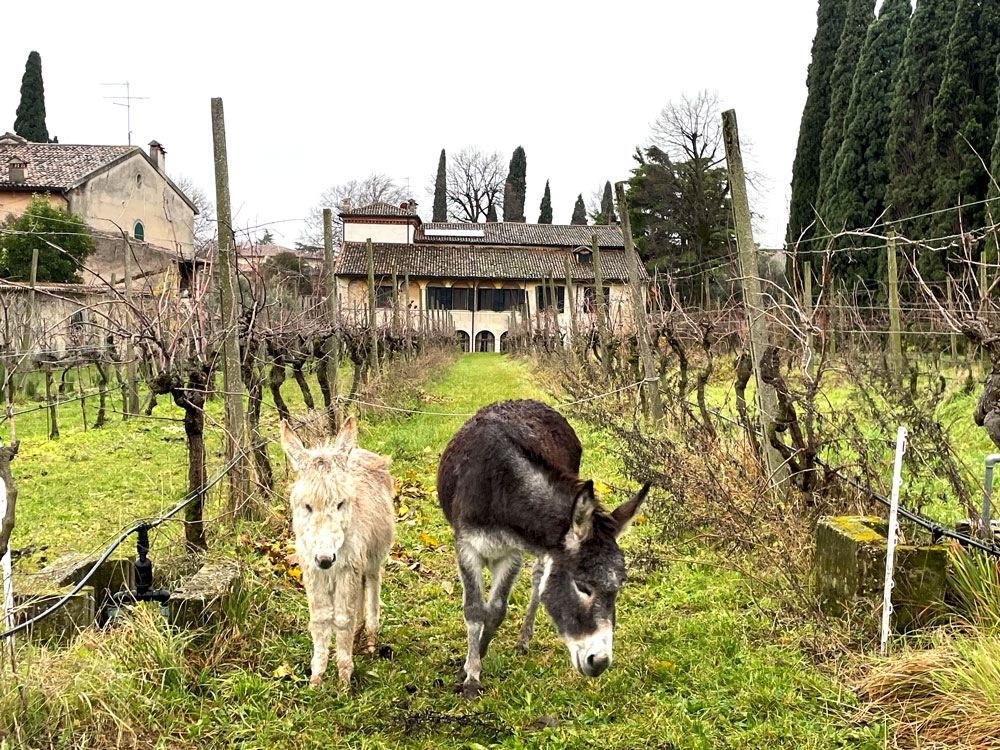
Until 2007, wine was produced in the vineyard for the family’s own use, both Bardolino (red) and Custoza (white). The vineyard’s layout is “old-fashioned”: different grape varieties are planted close to each other, white grapes next to red, rather than a modern single-variety setup.
Current challenges
Taking control of the situation again, avoiding chemical treatments, and addressing climate change are among the challenges we aim to tackle in the near future. In recent years, production has been practically non-existent due to downy mildew and the climate. Gradually, however, the vineyard is recovering.
Managing the open spaces in the face of climate change and during a generational transition has required a few changes in the management of the garden and open areas. In collaboration with the people responsible for day-to-day operations, we now implement a comprehensive strategy that works with, rather than against, the dynamics of nature and the place.
Circularity
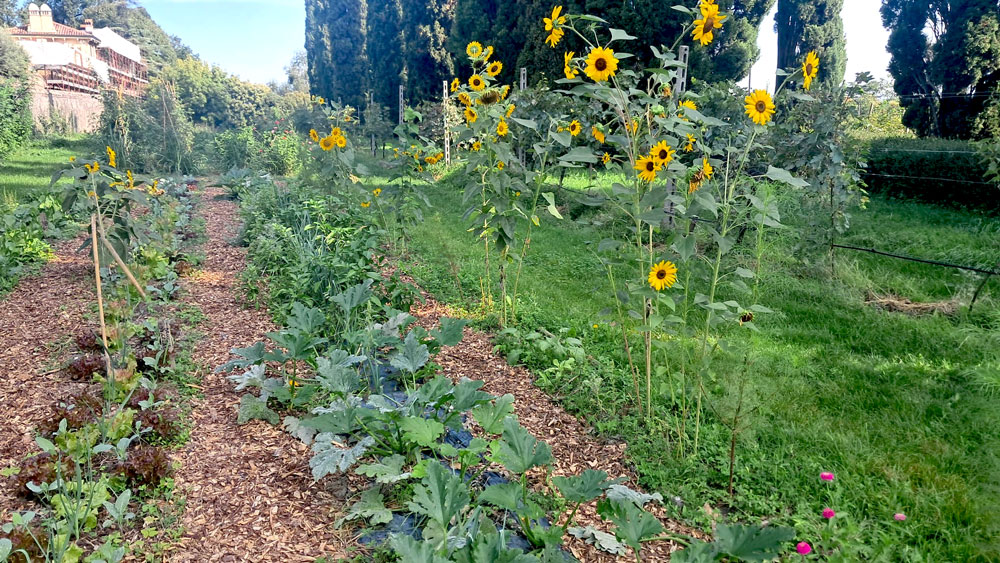
In particular, we have stopped using chemical products and focus on circular reuse of resources, while developing a new formal vision for the garden. This respects the original intentions but recognises their limits and seeks new interpretations: if the ideal of an English lawn cannot be achieved, we give space to daisies, dandelions, and wild mint. Wild herbs will grow among the mondo grass, and the mulberry trees that have spontaneously grown among the vines will be preserved, perhaps slightly repositioned.
Dead Hedges
Branches, leaves, and other plant waste are collected and composted. Since 2021, dead hedges have been introduced along the property walls, providing habitats for small animals and insects while avoiding waste removal. We are rethinking mowing and areas where the lawn is left to grow, saving tractor costs and reducing evaporation. Recently, the donkeys have been brought back to graze, helping soil regeneration.
Food Forest
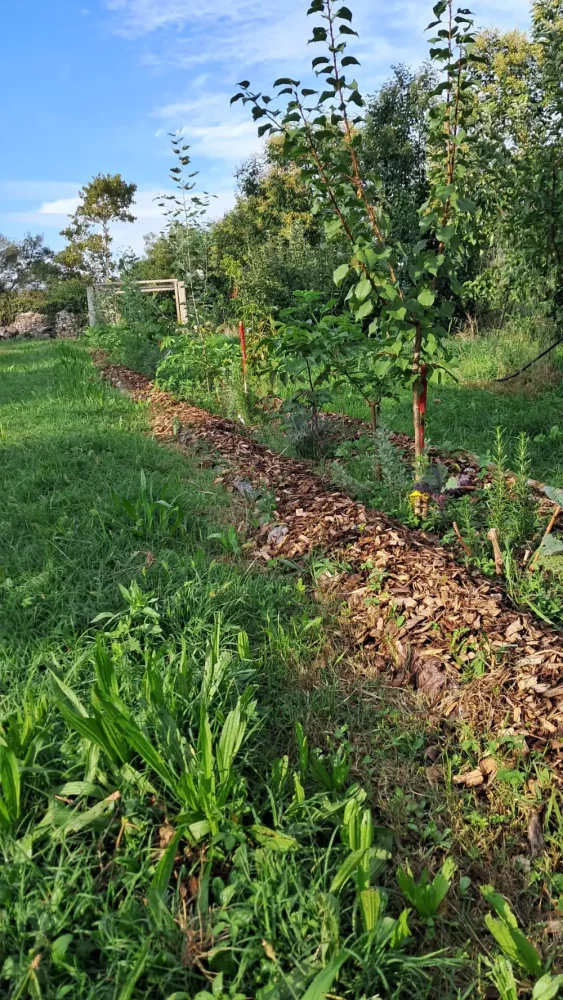
The orchard is being enhanced with new trees, gradually transforming it into a food forest. Experiments are underway with agroforestry and a new vegetable garden based on permaculture principles. We are also experimenting with “married vines,” planting trees among the vines as was done in the past. Over one hundred new trees have been planted, and we continue to increase the diversity of species.